Skin discoloration around the lower legs or ankles
Slow-healing sores or venous ulcers
These symptoms can be associated with venous insufficiency. A vein evaluation can help determine whether abnormal blood flow is contributing to your symptoms.
I absolutely love my Vein-care team at Trident Vein Center in Spring Hill, TN. Dr. Cunningham is very knowledgeable in his field of practice. He throughly answers all your questions and concerns. If you are having veins issues causing you any discomfort, I highly recommend Trident Vein Center. Don’t just take my word, schedule an appointment for a consultation you will not be disappointed. What an amazing staff!
I can say without a doubt Dr Cunningham’s staff have set the bar high. I’ve met most of his staff at both Brentwood and Spring Hill offices and they are all impressive. From the first contact via phone to meeting his staff in person,
Molly performed the most comprehensive ultrasound I’ve ever had explaining anything I asked.
The entire staff are genuine, personable, and professional.
I will soon have the procedure and I’m looking forward to it.
Everyone at the Spring Hill office was very friendly and kind. Dr Cunningham explained everything he was doing during the procedure which helped me to relax. Today was my first visit and it was a very good experience!
Extremely professional, definitely help solve a swelling problem I have for 51 years. I was pinned between two cars when I was 27 years. Legs have been seriously swelling for 51 years by, just after initial visit and ultrasound my legs are smaller than have been in months. If you having swelling , leg pain, my advice is book an appointment asap, your life may be at risk. Make an appointment today!
Respectfully,
Phillip G Pitts Sr
Everyone was so friendly. I was greeted the second I walked in. Checked in quickly, waited for a very short time before being called back. Madi was the first person I met with. She was super friendly, answered questions, and put me at ease immediately. I also saw NP Liza who answered even more of my questions. I am excited to get treatments underway, and am not feeling the nervousness I first walked in with. Looking forward to leaving all my future visits feeling this confident! Kathy B.
Every member of this team is to be commended for their care & welcoming smiles. Dr. Cunningham, thank you putting me at ease during the entire procedure. Such a pleasant experience.
Dr. Cunningham was very nice ,answered all questions that were asked . The staff was great!! From start to finish! I recommend them for all your Vein needs .
Ive been going to Dr Cunningham for few months now. He has absolutely calmed my nerves down each time before having a treatment. I would absolutely recommend him to ANYONE needing vein work done!
Everyone at the Spring Hill Trident Vein Clinic is always so nice. The doctor and nurse are both very attentive and they are very gentle when giving shots.
Response from the owner
12 months ago
Thank you, Tammy, for your kind words! It’s an honor to be your trusted vein specialist at Trident Vein Center. We’re delighted to know you’re pleased with your care!
Trident was my top choice for leg vein care. Dr Cunningham and his staff are very professional, competent and caring.
Response from the owner
1 year ago
Your kind words inspire us, Susan! At Trident Vein Center, we’re passionate about providing effective varicose vein treatment in a welcoming environment. Thank you for your trust!
Great staff, very thorough, affordable, & very prompt. Would give 10 ☆'s if i could. Highly recommend. Don't go anywhere else but here.
Response from the owner
1 year ago
Thank you, Lisa, for your glowing review! It’s wonderful to hear that our team at Trident Vein Center provided you with excellent varicose vein treatment. Your satisfaction means the world to us!
Wonderful experience from the team at the front desk to the the procedure team. Felt very much at ease
Response from the owner
1 year ago
Your kind words inspire us, Elaine! At Trident Vein Center, we’re passionate about providing effective varicose vein treatment in a welcoming environment. Thank you for your trust!
Everyone made me feel comfortable and welcome. Everyone knew their duties so every session went smoothly and painless! I was very impressed with the professionalism of everyone
So excited to share my experience from start to finish. From my reception and appointments to even billing. Their flexibility and knowledge and total transparency was wonderful No surprises. The nurses were pleasant funny any caring and professional and thorough. Dr Cunningham was an absolute joy yet so professional and compassionate. Going-thru this experience has overall been more than I even imagined. Oh and then the dove chocolates!
Everyone was great!! My legs were giving me pain especially at night, and after walking all day. After the first treatment no more pain at night. And after completing all treatments legs feel great. 👍
I had to have six different treatments done every one of them was a success I couldn't be more pleased Dr Cunningham and his staff are the very best and what they do they are very courteous and comforting I would recommend them to anyone Thanks again Dr Cunningham
Very efficient and professional staff. Dr. Cunningham is a knowledgeable and proficient doctor with a great personality. I would highly recommend this place for your vein treatment.
Dr. Cunningham and the staff are absolutely amazing. They genuinely care about their patients. I highly recommend Trident Vein Center!!! I'm glad that were highly recommend to me as well!!!
This is such a friendly office and staff. Dr. Cunningham was polite and seemed interested in my concerns. He answered all my questions. I look forward to returning to start my treatment and feeling better.
Very good experience. Ultrasound Tech was personable, knowledgeable and professional and thorough. Results were explained to me minutes after the test was finished. Procedure to correct the issues found was well explained and appointment was set to have the procedure done. Highly recommended.
Dr Cunningham and his staff are amazing. I suffered for years with ugly and painful veins in my legs. After my FREE consultation, I was presented with a comprehensive treatment plan. I then had some very painless and unobtrusive in office procedures done. I can now live pain free without the embarrassment of my varicose and spider veins. Stop wasting time. Call them TODAY.
Insurance Coverage
Medicare and many commercial insurance plans may cover medically necessary varicose vein treatment when coverage criteria are met. Coverage varies by plan, and our team can verify benefits before treatment.
Minimally Invasive
Trident uses image-guided, minimally invasive treatments performed in-office, helping many patients avoid traditional vein-stripping surgery.
Quick Recovery
Many patients are able to walk immediately and return to normal daily activities the same day, depending on the procedure and provider recommendations.
Quick In-Office Treatment
Many Trident vein treatments are completed in about 30 minutes or less, depending on the procedure and the veins being treated.
Varicose Veins in Murfreesboro
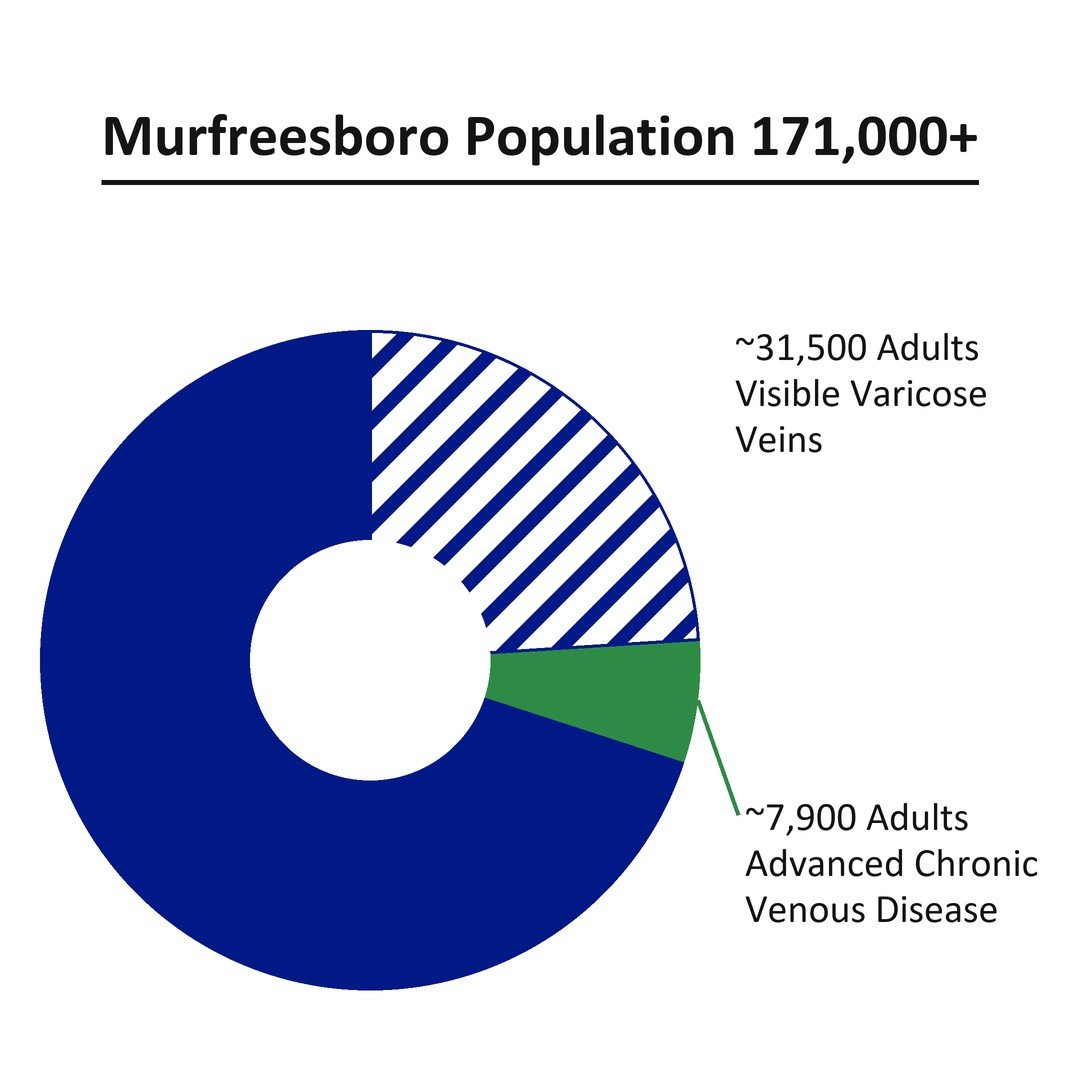
Murfreesboro is home to more than 171,000 residents, with adults making up the majority of the community. Based on national prevalence estimates, approximately 31,500 adults in Murfreesboro may be living with visible varicose veins, while around 7,900 may have more advanced chronic venous disease, including chronic venous insufficiency.
Vein disease can cause more than visible veins. Symptoms such as persistent leg swelling, aching, heaviness, itching, skin discoloration, or venous ulcers may indicate an underlying circulation problem. When these symptoms continue or worsen, a vein evaluation can help identify the cause and determine whether treatment is appropriate.
Minimally Invasive Vein Treatment With Little Downtime
After treatment and once cleared by your provider, many patients can quickly return to everyday activities around Murfreesboro, including:
Walking or cycling along the Murfreesboro Greenway
Exploring the trails at Barfield Crescent Park
Visiting Stones River National Battlefield
Spending an afternoon at historic Cannonsburgh Village
Getting back to work, errands, and family activities with minimal disruption
Experienced Vein Specialists Serving Murfreesboro
Patients from Murfreesboro have access to Trident Vein Center’s clinical team, which combines physician-led vein care, diagnostic ultrasound, and minimally invasive treatment in one coordinated process.
Thomas Cunningham, M.D., has performed thousands of minimally invasive, catheter-based, and ultrasound-guided vascular procedures. His clinical focus includes varicose veins, chronic venous insufficiency, edema, venous stasis disease, and leg ulcers. Chip Bell, M.D., is a board-certified Interventional and Diagnostic Radiologist with advanced training in minimally invasive vascular procedures and dedicated experience in vein care.
Depending on the diagnosis, Trident uses treatments such as ClosureFast™ radiofrequency ablation, Varithena® microfoam ablation, ultrasound-guided foam sclerotherapy, and compounded sclerotherapy. Each treatment plan is based on the patient’s symptoms, ultrasound findings, and the veins involved.
Dr. Cunningham has more than 25 years of experience and has performed thousands of minimally invasive, catheter-based, and ultrasound-guided vascular procedures. He specializes in treating varicose veins, chronic venous insufficiency, leg swelling, venous stasis disease, and venous ulcers.
Many of Dr. Cunningham’s patients have lived with years of aching, heaviness, swelling, or leg pain before seeking treatment. Others come to him after being misdiagnosed or treated with outdated procedures such as vein stripping. Using advanced, minimally invasive techniques performed in the comfort of the office, Dr. Cunningham helps patients experience lasting relief, regain their mobility, and return to healthier, more active lives.
Chip Bell
M.D.
View Bio
Dr. Bell is a board-certified Interventional Radiologist with more than 13 years of experience treating patients with minimally invasive, ultrasound-guided vascular procedures. He specializes in the treatment of varicose veins, chronic venous insufficiency, leg swelling, and other venous disorders.
Many of Dr. Bell’s patients have lived with years of aching, heaviness, swelling, or limited mobility before seeking treatment. Others come to him after unsuccessful treatments or outdated procedures. Using advanced, minimally invasive techniques performed in the comfort of the office, Dr. Bell develops personalized treatment plans that provide lasting relief, faster recovery, and help patients return to healthier, more active lives.
Liza
M.D.
View Bio
Liza is a Board Certified Acute Care Nurse Practitioner. She has a Bachelor’s in both Public Health and Nursing along with a Masters of Science in Nursing. With over a decade of experience in inpatient settings, Liza spent the early years of her career in Critical Care followed by General and Vascular Surgery where she provided inpatient management for a large volume, high-acuity surgical service.
1001 Health Park Dr, Suite 450, Brentwood, TN 37027
Answers for common questions
Frequently Asked Questions in Murfreesboro
Where can I get varicose vein treatment near Murfreesboro, TN?
Patients in Murfreesboro can receive specialized vein evaluation and treatment through Trident Vein Center’s nearby Brentwood location. Trident treats varicose veins, chronic venous insufficiency, leg swelling, spider veins, and other vein-related concerns using minimally invasive techniques.
Does Trident Vein Center treat patients from Murfreesboro?
Yes. Trident provides vein care for patients from Murfreesboro and surrounding communities in Middle Tennessee. Patients can schedule an evaluation at the Brentwood location for diagnosis, ultrasound testing when needed, and a personalized treatment plan.
What kind of vein specialist should I see for varicose veins in Murfreesboro?
Varicose veins are commonly treated by physicians with specialized vascular and venous expertise, including interventional radiologists. Trident’s physicians use ultrasound-guided and catheter-based techniques to diagnose and treat venous disease.
What vein conditions can Murfreesboro patients have evaluated at Trident Vein Center?
Trident evaluates conditions including varicose veins, chronic venous insufficiency, spider veins, leg swelling, heaviness, aching, skin changes, and venous ulcers. A consultation and duplex ultrasound can help determine whether symptoms are related to abnormal vein circulation.
When should I worry about varicose veins?
Varicose veins should be evaluated when they cause persistent pain, swelling, heaviness, itching, skin discoloration, bleeding, or sores that are slow to heal. Sudden one-sided swelling, warmth, redness, or significant pain should be assessed promptly.
Are varicose veins dangerous?
Many varicose veins are not immediately dangerous, but they can be associated with chronic venous insufficiency and complications such as swelling, skin changes, ulcers, bleeding, or superficial vein inflammation. Persistent or worsening symptoms should be evaluated.
What is the best treatment for venous insufficiency?
The right treatment depends on symptoms, vein anatomy, and duplex ultrasound findings. Depending on the diagnosis, treatment may include conservative measures, ClosureFast™ radiofrequency ablation, Varithena®, ultrasound-guided foam sclerotherapy, or other minimally invasive options.
Do compression socks help with varicose veins?
Compression stockings can help reduce swelling and discomfort by supporting blood flow out of the lower legs. They may help control symptoms, but they do not eliminate existing varicose veins or correct every case of underlying venous reflux.